For You Personally
Sole Trader Accounts
Change is an independent accountancy practice in York. We look after around 800 clients across Yorkshire, including the sole traders, freelancers, and self-employed people who want an accountant they can actually pick up the phone to. Self-employment is rewarding, but the admin (tax, expenses, registrations, deadlines) doesn’t sort itself out. That’s our job.

In a nutshell: we use your bookkeeping to prepare accounts that are then used on your self-employed pages of your tax return, claim the right expenses, advise on the questions that come up (going limited, registering for VAT, Making Tax Digital), and tell you what to pay and when. Fixed fee, agreed upfront. Plain English at every step.
Do You Actually Need an Accountant if You’re a Sole Trader?
If your trading is genuinely simple (one income source, no employees, no VAT, expenses you can total on a sheet of A4) you can run your own books and file your own Self Assessment via HMRC’s online tools. It’s free and it works.
In practical terms, the people who benefit most from an accountant are the ones whose work doesn’t fit neatly into that picture. If you’re invoicing several clients, claiming a mix of expenses, near or over the VAT threshold, weighing up going limited, or about to be pulled into Making Tax Digital for Income Tax, an accountant pays for themselves quickly. We catch the expenses you’d miss, file on time, handle HMRC when they come knocking, and tell you what’s worth doing before the year-end rather than after.
What We Do for Sole Traders
The ongoing work most sole traders need from us:
- Bookkeeping kept up to date through the year, set up cleanly so MTD-ready quarterly filing doesn’t catch anyone out
- Self Assessment prepared, reviewed, and filed — see our Personal Tax Return page for the detail
- Allowable expenses claimed properly: vehicles, home office, equipment, software, training, professional fees
- VAT registration when (and only when) it’s the right move, and ongoing returns once registered
- The £1,000 trading allowance flagged for clients running a small side income
- Class 2 and Class 4 National Insurance handled inside your Self Assessment
- HMRC correspondence translated, escalations sorted, deadlines met
When the business question is bigger (should I go limited?, how do I price myself?, what’s the right pension contribution?), that’s where our Tax Planning service comes in.
What About Making Tax Digital?
From 6 April 2026, Making Tax Digital for Income Tax starts to apply to self-employed people and landlords with qualifying income above £50,000. It’s the biggest change to how sole traders report tax in a generation, designed (HMRC insists) to make tax simpler…
If MTD for ITSA might apply to you, we’ve covered what changes and what you need to do on our Cloud Accounting & Making Tax Digital page.
Should I Go Limited?
The most common question we get from established sole traders. The honest answer is: it depends on profit, risk, other income and circumstances, and what you want the business to look like in five years.
As a rough rule, once your profits get into the £30,000–£50,000 range it’s worth running the numbers. Above that, a limited company may save tax. But it also adds compliance (annual accounts at Companies House, corporation tax, payroll if you draw a salary, director’s responsibilities), and it separates your personal money from the business in ways that matter if anything ever goes wrong.
We walk through your numbers, your risk profile, your ambitions, and what your day-to-day would actually feel like running a company. If the answer is yes, we handle the transition. If the answer is not yet, we tell you that too.
How We Work
Three steps, every year.

You complete our online checklist. It walks you through what we need: income, expenses, anything HMRC has sent you.

We prepare your accounts and return. Matt or Julia will be in touch with anything that needs a quick conversation: an expense we’d like to claim, an allowance you’ve missed, a VAT or MTD question. Records flow through ShareFile, and we work with Xero, FreeAgent, and Dext for clients on cloud bookkeeping.

We file and tell you what to pay. You see everything before it goes to HMRC. Once you’ve approved, we submit, and you get a clear note of what’s due and when. If HMRC writes to you afterwards, forward it on. We’ll either translate it or tell you to ignore it.
If we handle your Self Assessment, we’ll ask for your records by 30 June at the latest. That gives us plenty of time to query, prepare, and file well before the January deadline.
Who we look after
The sole traders and self-employed people we look after fall into one or more of these groups:
- Tradespeople: plumbers, electricians, joiners, builders, decorators
- Freelancers and creatives: designers, writers, developers, photographers, marketing consultants
- Professional services: solicitors, IFAs, HR and other service businesses
- Wellbeing professionals: therapists, instructors
- Drivers and couriers: taxi, delivery, mobile traders
- Tutors, coaches, and instructors: private teachers, fitness coaches, consultants
- Side-hustle earners: Etsy and eBay sellers, content creators, contracting alongside a day job
- Newly self-employed people in the first year or two, getting set up properly
Whichever group you’re in, the underlying work is similar. The detail is where it pays off.
Why clients stay with us
We’ve been working with sole traders since Stacey McVeighty FCCA founded the practice in 2014. Today we look after around 800 clients from one expanded office in Fulford, with the team that joined us from Sunley & Co now working alongside the original Change team under one roof. We’re ACCA-accredited, and we hold 39 five-star reviews on Google, most from clients who’ve been with us for years.
Fixed fees. Plain English. The same team next year, and the year after that.
Frequently asked questions
If your trading income from self-employment is £1,000 or less in a tax year, you don’t have to register for Self Assessment or report the income. Above £1,000, you do, even if it’s a small side income. If you’re not sure whether yours counts, drop us a message and we’ll work it out with you.
From 6 April 2026, MTD for ITSA applies to sole traders and landlords with qualifying income above £50,000. It drops to £30,000 from April 2027. Below that, you’re out for now. We get clients ready well ahead of the threshold so the switch is genuinely uneventful.
The headline rule is wholly and exclusively for business. In practice, that covers vehicle costs, a portion of home running costs if you work from home, equipment, software subscriptions, training relevant to your trade, professional fees, mileage, and a lot more depending on what you do. We go through your situation properly when we set up. Most new clients claim more once we’ve had the conversation.
You must register once your taxable turnover passes the VAT registration threshold. Some sole traders register voluntarily before then, usually because their customers are mainly VAT-registered businesses and the reclaim outweighs the admin. We talk it through before you commit. It’s not always the right move.
Yes. We handle the transfer, contact your existing accountant, pick up your records, and pick up the work where they left it. Most switches happen in February following a surprise, unwelcome tax bill, but we can do it any time of year.
Ready to get your sole trader accounts sorted?
Ask for a fixed fee. A couple of minutes on our online form, and we’ll come back with a number.
You may also like...
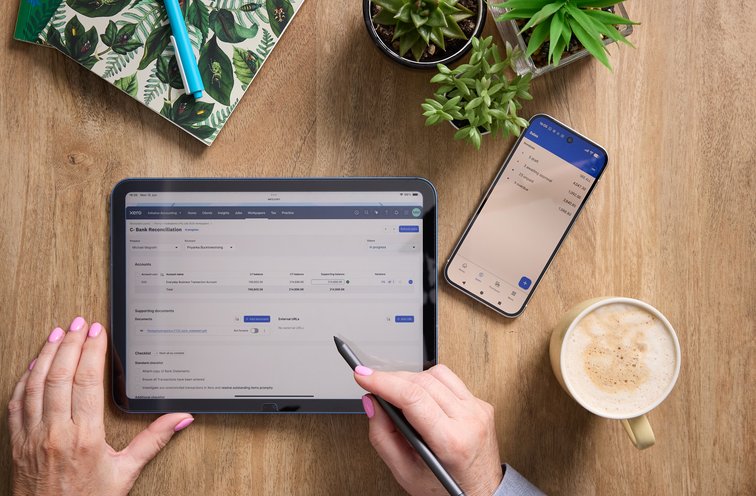
Cloud Accounting Software
FreeAgent or Xero plus Dext - setup to support you and your business
Read More