For Your Business
Company Tax

We prepare and file Company Tax Returns (CT600s) for limited companies across Yorkshire and the wider UK, from one-director consultancies to studios, agencies, and trading companies with staff and premises. The company tax return is the annual tax report to HMRC, sent along with the full statutory accounts. The bigger picture of how your company is structured for tax can be found on our Tax Planning page, and the two services of work join up neatly when you use us for both.

In a nutshell: we take your accounts, prepare the CT600, work out what you owe, file it with HMRC, and tell you what to pay and when. Fixed fee, agreed upfront. Plain English all the way through.
Do you actually need an accountant for your CT600?
Technically no. However, HMRC has removed the ability to file via their website. You now need commercial software to file your accounts and tax return.
Once your company has any of:
- profits in or above the marginal relief band
- capital spending you want to claim against tax
- a director’s loan
- more than one shareholder
- associated companies
- or any work that might qualify for R&D relief
…the return becomes a mammoth task that takes experience to get right. We catch the things you’d miss, file on time, and have the conversations with HMRC when they need to be had.
What we offer for your corporation tax
The compliance work most limited companies need:
- CT600 preparation and submission, on time and reviewed before it goes
- Calculating tax payable accurately, including marginal relief where it applies and handling the new associated company rules with accuracy
- Capital allowances claimed correctly within the return (the planning conversation about what to spend lives on our Tax Planning page)
- Director’s loan account treatment, including s455 tax where it applies
- Trading loss handling — carry-forward, carry-back, group relief where it applies
- HMRC correspondence translated, queries handled, deadlines met
- Quarterly instalment payments managed where the company has crossed the threshold.
For the statutory accounts that feed into the return, see our Company Accounts page. And we have information on VAT, which is often bundled with this work. For the records that feed both, see Bookkeeping.
If you’re a sole trader or partnership as opposed to a limited company, you’ll need our Sole Trader Accounts page.
Marginal relief: the £50k to £250k band
Since April 2023, UK corporation tax has had two rates and a sliding band in between. The small profits rate of 19% applies to taxable profits up to £50,000; the main rate of 25% applies to profits above £250,000. Profits between the two attract marginal relief, raising the effective rate from 19% to about 26.5% as profits climb.
In practical terms, this means a company making £150,000 of taxable profit pays neither 19% nor 25% but something in between — and the something depends on whether you have associated companies and how long your accounting period is. The arithmetic isn’t hard, but it catches plenty of directors who assume they’re still on the small profits rate.

Associated companies - the trap that surprises directors
The £50,000 and £250,000 thresholds aren’t fixed per company. If you control more than one company, the thresholds are divided between them. Two associated companies share the bands, so each one moves into marginal relief at £25,000 of profit and onto the full 25% rate at £250,000.
Directors of holding companies, property companies, or family businesses often end up paying more tax than they expected because no one flagged the associated-company rule. We’ll ask in our pre-year-end meeting and tell you straight if it will affect your tax calculation.
Tax planning sits alongside this.
This page covers compliance: making sure the return is correct, the figures are accurate, and the deadlines are met. The work that actively reduces the tax bill - director remuneration mix, R&D claims, capital allowances strategy, and sale and succession planning - can be found on our Tax Planning page. The two services join up: planning shapes what goes into the return, and the return tells us where the next year’s planning conversation needs to happen.
For clients who use us for both, those conversations happen at year-end, and we map them onto the CT600 as we prepare it.
How we work
Four steps, each year.

We agree the timetable. Companies file CT600s based on their own accounting period-end, not on a single national deadline. We work back from yours: HMRC needs the return within 12 months of the accounting period end, and for SMEs, corporation tax is payable 9 months and 1 day after the period end. We start preparation well before that.

We prepare and review. Your bookkeeping records (in Xero, FreeAgent, or whatever you use) feed the accounts; the accounts, in turn, feed the CT600. We go through capital allowances, director’s loan position, marginal relief, and anything that needs a quick conversation.

We file it and tell you what to pay. You see the return before it goes. Once you’ve approved, we submit, and you get a clear note of what’s due, when, and to which HMRC reference it relates. If HMRC writes to you afterwards, forward it on. We’ll either translate it or tell you to ignore it.

We remind you what and how to pay. One month before the payment due date we will email you to remind you of the amount due, when and how to pay it.

Who we look after
The companies we handle Company Tax Returns for most often:
- Owner-managed limited companies with one to a handful of directors
- Director-shareholder consultancies and contractor companies
- Trading companies with staff, premises, and growing turnover
- Property holding companies and SPVs
- Companies in the marginal relief band (£50,000–£250,000 of profit) where the rate calculation matters
- Growing companies approaching quarterly instalment territory.
- Companies with associated entities that need the threshold-division question handled properly
Whichever you are, the underlying compliance work is similar. The detail is where the fee earns itself.
Why clients stay with us
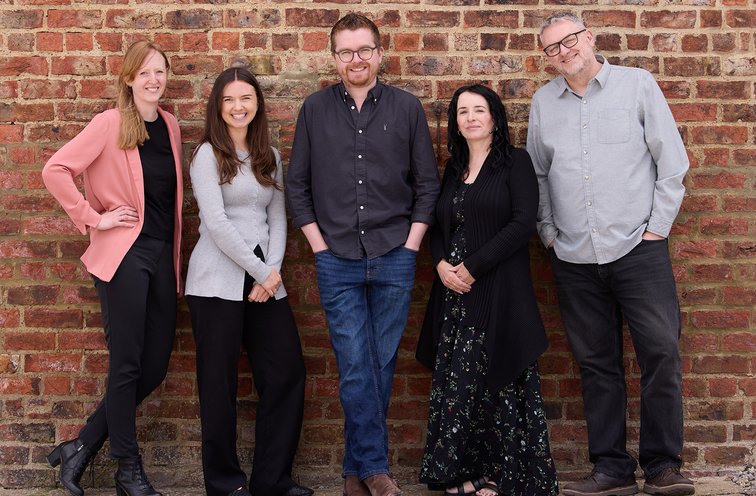
We’ve been working with limited companies and their directors across Yorkshire since Stacey McVeighty FCCA founded the practice in 2014. Today we look after around 800 clients from our office in York. We’re ACCA-accredited, and we hold 39 five-star reviews on Google, most from clients who’ve been with us for years.
Fixed fees. Plain English. The same team next year, and the year after that.
Frequently asked questions
Twelve months after the end of your accounting period. Corporation tax itself is payable earlier: 9 months and 1 day after the period end for most SMEs. Companies with annual accounting profit above £1.5 million pay in quarterly instalments instead. If we look after your return, we work backwards from your specific date and request your records well before we need them.
For profits between £50,000 and £250,000, you pay tax at an effective rate somewhere between 19% and the equivalent of about 26.5%. The mechanics use a 3/200 fraction applied to the difference between profits and the upper limit. We work it out as part of preparing your return. The headline: above £50,000, you’re no longer paying a flat 19%; above £250,000, you’re paying the full 25% with no relief.
Yes. The £50,000 and £250,000 thresholds are divided by the number of associated companies you control. Two associated companies, two-way split. Three, three-way. We check this at the start of each year and tell you what your effective thresholds look like before HMRC does.
If the loan isn’t repaid within 9 months of the company year-end, the company pays s455 tax at 35.75% on the outstanding amount. That tax is refundable when the loan is eventually repaid. There may also be a benefit-in-kind charge on the director if the loan is interest-free or below HMRC’s official rate. We model the position and tell you straight what the cleanest route is.
Yes. We handle the transfer, contact your existing accountant, pick up your records, and resume the work where they left off. Most switches happen well ahead of the next year-end so we can start the planning conversation properly. We’ve done it plenty of times. (Including for clients whose previous accountant didn’t tell them they’d been in the marginal relief band for two years…)
Ready to get your company tax sorted?
Three ways to start. Whichever’s easiest.
You may also like...